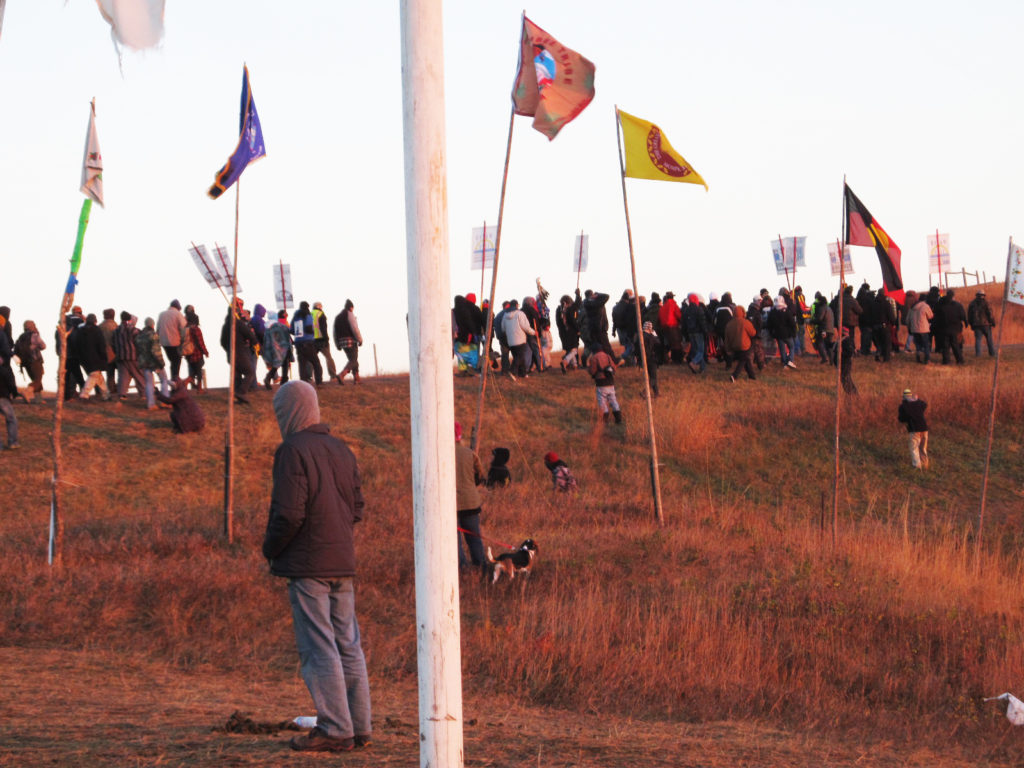
Scenes of unarmed Native Americans facing police aggression at Standing Rock are riveting, but behind the front lines quieter work goes on 24/7 to sustain the struggle against the Dakota Access Pipeline. Several thousand Tribal members and allies–children, elders, families, youth–are creating amazing communities that are an integral part of the struggle.
I recently stayed at Oceti Sakowin, the largest encampment at Standing Rock, observing and participating in every day life like so many others, Native and non-Native.
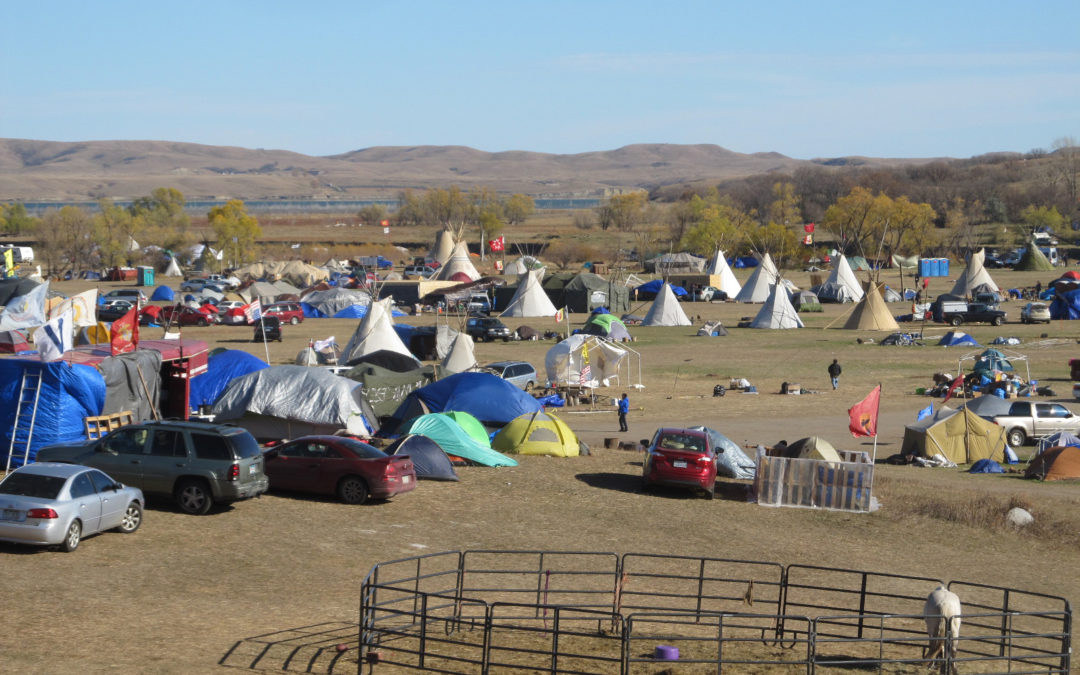
Just a mile or so from where the pipeline slashes across the countryside, the camp sits in a large flat basin of land between the road and the river, crowded with tents, tepees, RVs, trailers, repurposed school buses and yurts with beautiful carved doors.
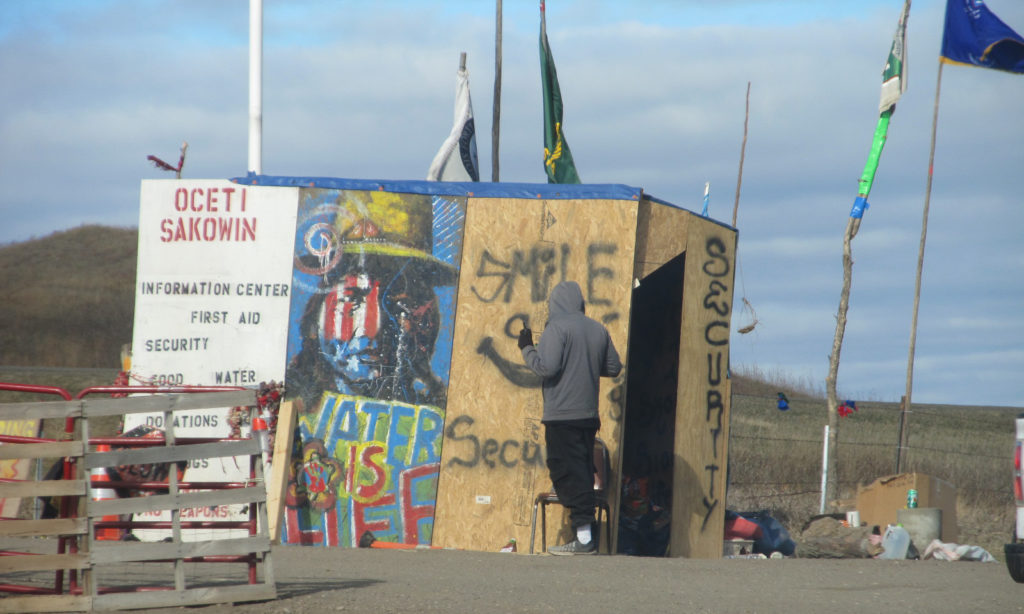
I drive in and stop at the security booth (a small wooden shed painted with a mural). A young man asks why I am there, gives me a friendly but appraising look, and directs me to the media tent atop “Facebook Hill,” the only place you get decent reception—or would if law enforcement didn’t scramble the signal.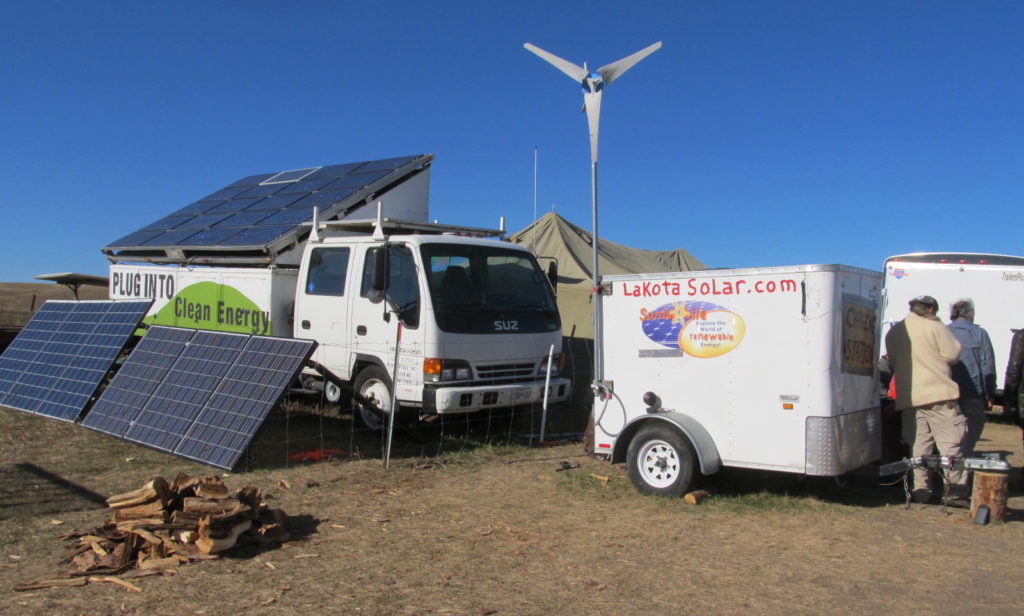
Passing the Legal and Wellness tents, I enter Media, a hive of activity powered by portable solar and wind generators. New arrivals get IDs checked, and if approved get red media passes along with strict guidelines for photography and recording. In particular: no prayers or ceremonies. I learn that until 1978 Native ceremonies were outlawed and photos used as evidence to repress these practices. Understandably, despite the warm welcome they are very cautious.
I visit the volunteer space and learn a few basics, but mostly people plug in wherever they are called–I hear this time and again. On my way to set up my tent I stop at the main fire circle, where announcements, drumming, singing, praying and calls to action are broadcast throughout each day. A young Canadian Native woman has the microphone and is describing how a dream drew her here, to witness and to show solidarity.
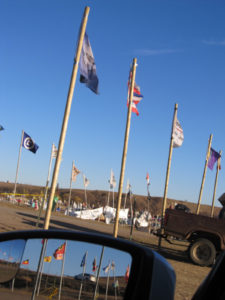
I turn down the main avenue, admiring the hundreds of tribal flags waving in the stiff breeze. Everywhere I see people chatting in small groups, sorting clothes, bustling around the collective kitchens, assembling yurts and tepees, chopping wood. Children roam and run. Dogs play, horses graze. Despite all this activity, animal and human, and no running water, people keep the camp impressively clean. Locally supplied Spiffy Biff portable toilets complete with hand sanitizer dispensers do their part.
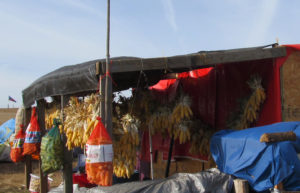
Before I get far, Claudia, a Peruvian from California, calls me over. She is determined, she tells me, to process a just-delivered truckload of corn before it goes bad. I squat among the ears, husking, chatting and admiring Claudia’s persistence in cheerfully cajoling passersby to stop and help.
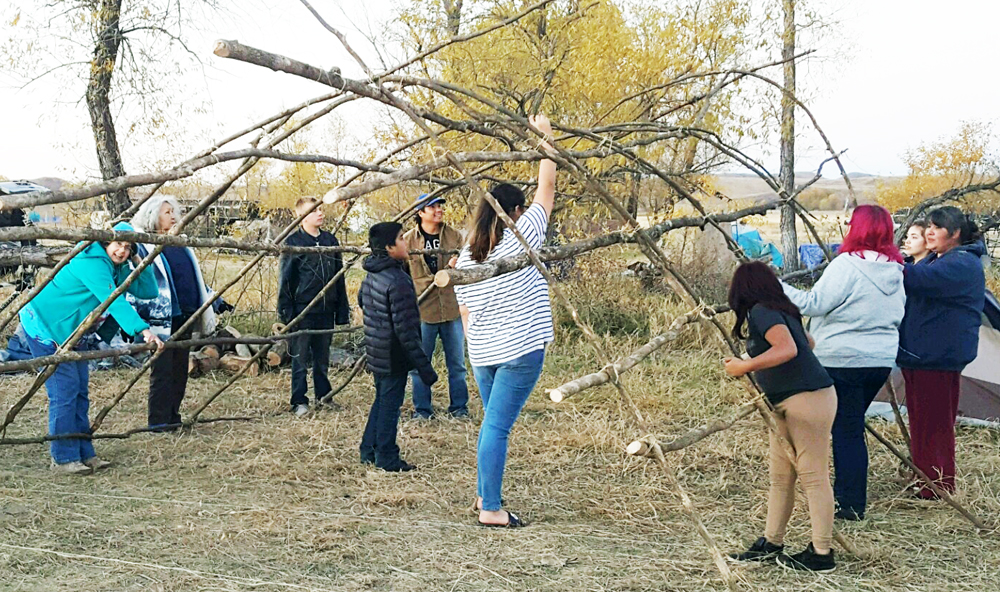
In the days I am there, I run errands for the children’s school and Grandma’s kitchen, drive people to actions and from jail in Mandan in the middle of the night. I help build a wigwam, assist a disabled elder to get around. I attend meetings, make friends, go to actions (but avoid arrest), get treated for a hurt foot at the medic tent and for migraine at the herbalist tent. I attend speakouts and ceremonies, listen to prayers in Native tongues. I make friends with a harried media person and share moral support and hugs. I check in with folks during the actions. I receive friendly but purposeful nudges on how to act in this community.
Time and money mean little here. What looms large are solidarity and mutual aid. Folks are patient with newcomers, and compassionate but firm toward behaviors that might put the community at risk.
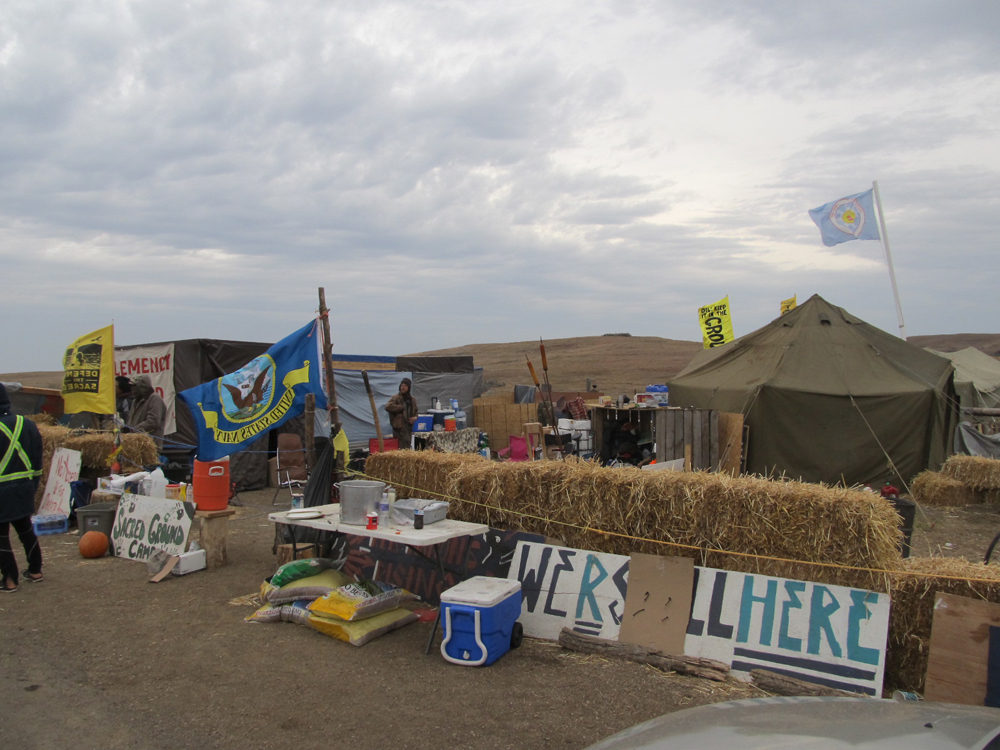
Like everyone else, when hungry I visit one communal kitchen or another. The main kitchen area has several big army-style tents tents for food donations, prep and cooking, and serving and eating. Tribes set up other kitchens, each with specialties and personality lent by the cooks, who together with committed helpers create fabulous meals comprised of whatever donations come in. They work miracles in cramped spaces with scarce power and water, cooking mostly on wood stoves and campfires.
Grandma Diane, a Paiute from California, feeds over a hundred folks a meal, always adding abundant servings of love and hugs. She never has to call for volunteers, she says. Folks just “jump up to help.” Among the meals: elk stew, quinoa casserole, cabbage salad, sweet potato fritters, fried bread—a camp-wide favorite!
Despite the risk and the major effort, Diane moves her kitchen to the front-line camp when the call goes out. The camp that is raided a couple days later by militarized police using tear gas, projectiles and mass arrests, pushing down structures and trampling possessions. I worry until I find out that she is okay, still calling for donations of cheese, fruit, chorizo, propane and -10 degree sleeping bags: despite everything she’s planning to stick it out for the winter.
During the worst moments of violence people in Oceti Sakowin remain tense but calm, many participating in the actions, many others keeping the camp going, providing backup, security, healing, respite and food. They tackle shortages of key supplies, rumors, weather, issues of decision-making and execution among many tribes, bad press and other attacks, balancing openness and security, technological lacks, Native and non-Native relations, the constant stream of newcomers to orient and integrate, the risk of burnout among key people who have taken on leadership, PTSD, and other mental health challenges, and more.
Tribal unity, solidarity, historic necessity, and legal and human rights all undergird the broad and growing #NoDAPL movement. But it is this amazing, inspiring community forged in struggle at Standing Rock that is its sustaining center.