About JB
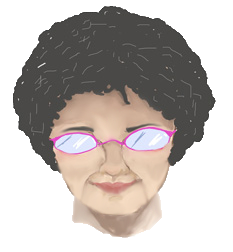
When she was nine Juliana started The Early Risers Club. It involved sitting in an apple tree and pulling up books in a basket. Snacks, too. It was such a good idea, she thought. The birds! The morning air!
Only, nobody else came…
Much later, JB’s young daughter Sophie drew her impression of this club. 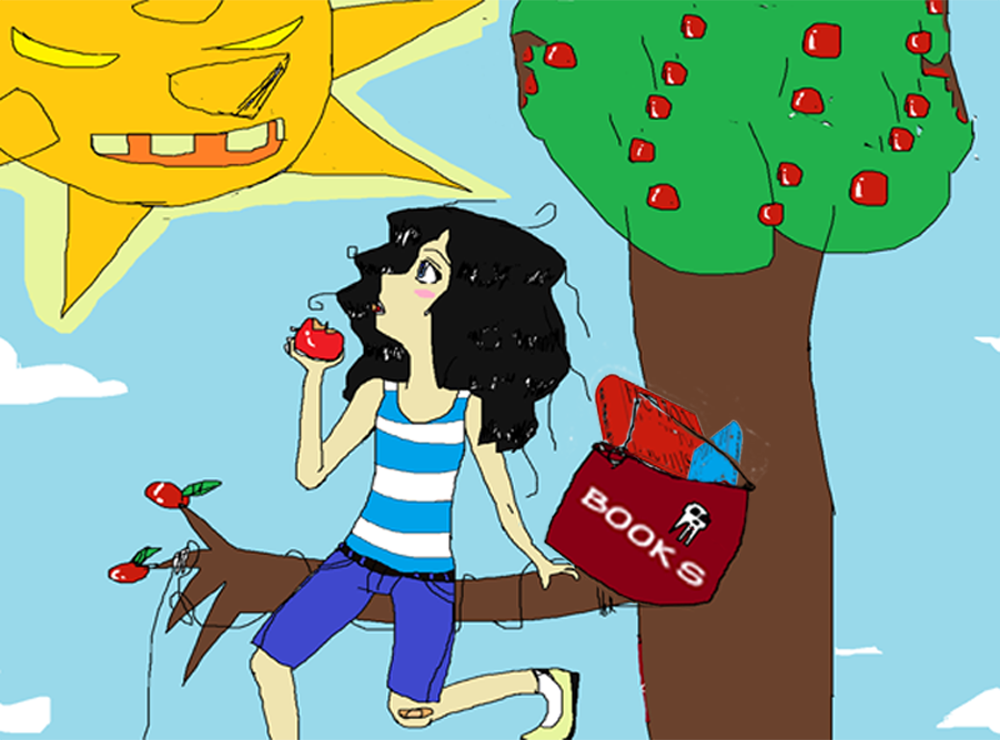
I’m guessing Sophie’s not a member of the Early Risers Club.
Nope!
Juliana has started many things since then, in Mexico and the U.S., but gave up trying to drag her friends into trees early in the morning. Instead, she uses that time for writing. The later parts of the day she finds are best for music, organizing, agitation, conversation, cooking, going here and there, and, of course, eating. For nearly forty years, she did Spanish translating and interpreting, too, to make a living, but since 2012 she has been attempting to make a living by getting support for the activist work she is involved in. How this plan is turning out is a subject she’ll tackle in JB’s Journal. Spoiler alert: it has not been easy!
Juliana was named after the Queen of Holland, but early on realized she didn’t care for queens, kings, or rulers of any sort. Her parents and their friends talked about justice and equality for all, and she thought that was a very sensible idea.
But everywhere she looked that wasn’t happening.
- Here is a short list of things she didn’t like growing up:
- School
- War
- Being treated better than other people (especially people who were not white and who were poor)
- Being treated badly, especially for being a girl, a Jew, a shy person and someone who asked questions
- Not being noticed
- Being noticed at bad moments, such as for not doing her homework
- Yelling and fighting
- Her cat, Magnificat, getting eaten by the dryer
Horrrrible! I hope you’re more careful now!
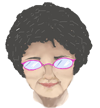 Yeah, I use a clothesline!
- Bullies
- War
- School
- Beets (as a kid; beets now tolerated.)
- Being misunderstood
- People being mad at her
- Death, esp. violent and unexpected
- Embarrassment
- Criticism
- Racism
- Close-mindedness.
- People who don’t care
- People who do bad things to people, especially kids
- One could go on, but that’s plenty for now…
Things she liked:
- Art
- Reading
- Bodies of Water
- Mountains
- Scenery
- Swimming
- Reading
- Weather
- Rebellious politics
- Fairness
- Writing
- Talking with people about important stuff; small talk not so much
- Sunsets
- Chocolate
- Mexico
- Mangos
- Non-scary people
- Reading
- Friends
- Dogs
- Parties (if not too noisy and with good food)
- Reading about different times and countries and made-up places
- Bravery
- Unassigned reading
- Making crafts and artwork
- Dogs
- Walking
- Gymnastics
- Playing jacks
- Swimming
- Singing
(This is a small sampling. JB is pleased to see that as she gets older the likes list is getting longer)
Juliana comes from a family that paid a lot of attention to justice and did a lot of activism. Her mom helped bring badly wounded Vietnamese children to the states for treatment. Some became our friends. She later started a community organization for mothers and children. Her dad wrote books and articles critiquing bad US foreign policy, such as the Vietnam War, wars in general, the US economy’s devotion to killing, and greedy corporations.
Juliana’s family was often caught in the vise of contradiction, being middle class and privileged in many ways, even while it challenged unfairness. Juliana noticed this and it bothered her.
When her family spent the better part of a year in Mexico in 1973 just after she finished high school, Juliana fell in love: with the country, the city, the student movement…and with a particular Mexican student. After trying the University of Wisconsin for a semester and being disappointed that its activism had dried up, JB went back to Mexico and spent the next sixteen years there. She studied anthropology and political science, and made a living translating documents and later translating TV programs for dubbing. Mainly, though, she became immersed in popular movements, where she did art, design, writing, and theater–as well as other stuff associated with helping keep activist efforts going. Later she wrote about this part of her life in the memoir/novel The Educación of Julia.
She taught…
Times were challenging in Mexico for popular movements in the seventies, and they got worse, with a great deal of repression and bloody military dictatorships in many countries of Central and South America. Juliana participated in solidarity with the popular movements fighting these dictatorships–which were all supported by the government of her own country, the United States.
Being an activist could lead to uncomfortable consequences, including:
persecution by police
arrest
deportation
torture
being forced into hiding
mock execution
being targeted by provocateurs
marginalization by frightened friends
being kicked out of places
divisions and paranoia
being disappeared
turning up dead
Some of these things happened to her, others to friends and companerxs. Fortunately, the most serious ones did not.
She noticed many things about many things, but two are relevant right now:
One is that activists working for a more just society have our own culture, a global culture spanning all peoples. We create music, art, books, mostly about the social problems and movements we push for, and the world we want to see. We have a common way of thinking and talking and joking. We have ways of relating. Even ways of dressing. But although we often honor distinguished individuals among ourselves, when we refer to ourselves as a people, we often do so in the negative! Such as: “we are always fighting among ourselves,” or, “we failed,” it’s the Left’s fault that Trump got elected. And so forth.
This bothered Juliana. She noticed it sounded similar to the internalized oppression of other oppressed minorities.
DD: Social justice activists an oppressed minority?
GG: Let’s see: an oppressed minority is a group of people subject to negative stereotypes, repression, exclusion; belonging to this group exposes them to increase stress; they are more at risk than others for losing their jobs, housing, freedom, health, even lives; and whose interests, voice and presence are excluded from mainstream culture and decision-making.
DD: I guess you’re right.
In Mexico Juliana learned to be an anti-colonial anthropologist. That means someone who doesn’t study other cultures in order to help take them over and control them, but someone who studies her own and other people’s culture in order to gain more understanding of their nature, to make sure they survive and get justice. That goes for activists, too, she decided. And ever since she has focused most on her own people, activists, and our culture.
Juliana always loved reading fiction, stories with characters having interesting adventures and doing fascinating things and exploring new ideas and new territories of the earth and the mind. Especially women. But she noticed that the adventures she and her sort of folk had—fighting oppression and bosses and organizing demonstrations and going to jail, and battling and occasionally beating city hall and even dictators—rarely appeared in the books she read. Why were there so many books about police and detectives catching street criminals and crafty crooked individuals, but so few about folks working together to expose, challenge and defeat criminal corporations, repressive governments (unless they were Communist or Nazi), or exploiting bosses? And what about the fascinating interpersonal relations and conflicts that arise when people take on the system?
She looked and looked for such books. Asked her friends. They recommended a few, and also movies about activists; but there weren’t many. Moreover, she noticed that when folk like her did appear in mainstream literature, they were often negatively portrayed.
JB: “We’re a culture, Granny Gus. “An oppressed minority.”
SP: “Oppressed is right,”
GG: Very true, dearie. So like all oppressed minorities we need our own literature, that shows what we’re really like.
DD: Why don’t we have that already?
GG: Hm. Activists and social critics write jillions of books about social issues. That’s one of the main things we do. But stories, fiction, about ourselves, showing our true selves to ourselves… Few of us take the time.
JB: Well, we need novels and movies and programs that show us doing our thing. That help folks identify with our lives and understand what makes us tick as activists and as humans.
SP: But not as bombs.
DD: Ha ha. That’s one of the big lies about activists, that we’re all about violence and bombs. that is so untrue.
Yes, there are tons of stereotypes. That’s a big thing we look at in the LLZine: Fiction Featuring Activists: the good, the bad and the ugly.
GG: That’s a cliché, dearie.
JB: I know, Granny Gus. After vanquishing stereotypes and lies we’ll tackle clichés.
SP: I won’t hold my breath.
Yes, what we look for, and what we do and encourage others to write, is fiction featuring activists. Of course, we want them featured in a good way, so she developed a test.
DD: Like the Bechdel Test regarding women in fiction?
JB: Yeah, kind of like that, although AB likes it to be called the — – Bechdel test.
JB and LLZ
For her first foray into fiction featuring activists, Juliana wrote the novel Rainwood House Sings, the first in the Rainwood House series. Seeing so little in the way of fiction featuring activists, she decided to create a means for publishing the novel independently. so was born Life in the Liberated Zone, as an entity to share her writing about the activist experience and culture. Other ways of exploring it have developed as she’s been working on this initiative and this website.
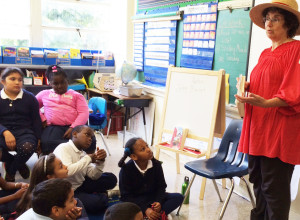
Juliana Barnet, author and illustrator (with her daughter Sophie) of the “social justice mystery” Rainwood House Sings, is a writer, anti-colonial anthropologist, activist and cultural organizer. She has taught literature, writing and creative expression to adults, youth, and children, at “people’s schools” (escuelas populares) and neighborhood organizations in Mexico City and at Washington, DC area organizations including the Great Labor Arts Exchange, Occupy DC, Camp Solidarity, and others. She has helped start several community-based cultural organizations focused on young people, including Asociacion Cultural de Ayuda a la Comunidad, Actively Building Community, and Rap ‘n Act, and has worked with many local schools, nonprofits and community organizations.
About Juliana – why she started LLZ and how she trained for it
If you are going to talk about the lived experience of a group of people you belong to—namely, ACTIVISTS—it seems reasonable to begin with yourself [I speak in the second person because I’m speaking to you and also to me, in that way one does in one’s head. Don’t you? I also refer to JB, my alter ego. So we have a lot of tenses in play here, which is a writer’s right and no one can take it from me (or from you, she, them, one, us or it…) Tenses, unite!
JB experiences leading up to Life in the Liberated Zone:
Activism
Alternative Education
Anthropology
Art
Community-Building
Language
Music
Organizing
Writing
Juliana was named after the queen of Holland, but she never liked queens, kings, or anybody thinking and acting like they’re better than other people, controlling folks’ lives, taking more than their share and treating people poorly. Knowing that this kind of thing went on, and in fact was everywhere, bewildered her, even when she was very small.
Her parents and their friends talked and worked on stopping war (mostly the Vietnam war) and making things fair for people in this country and around the world, especially people with darker skin. This seemed good and right and sensible to Juliana. Problem was, many other things did not make sense, and this caused Juliana great confusion and pain.
She loved learning and books. In fact, on her own as a kid she studied:
o Weather
o Dinosaurs
o Crafts
o Astronomy
o Spanish
o Alternative Education
And she constantly read and learned from historical novels.
Partial list of things that did not make sense to Juliana (also known as Julie, Julia—especially in Mexico–, Jul or Jules, so take your pick):
• Fighting and yelling among her siblings (or any other loud and angry behavior that “scared her ears.”)
• School.
• Having more things than other people, whether in other parts of the world or at home.
• The Bomb. Bombs in general, but especially that one.
• Having more privileges than other people, especially the darker skinned and poorer people that her family and friends were trying to get a better system for.
• Meanness in general.
• School.
• War.
• Being made to hurry, and constantly mocked for being slow. Juliana liked to take her time, and still does.
• Cars, which always seemed a totally ridiculous and dangerous way to travel.
• School. Okay, so school looms large in this list. Why did school so not make sense to Juliana? Because…
o A few big people boss and control dozens of smaller people
o People don’t get to work and figure things out together, which makes more sense than everyone usually working alone
o Big problems are ignored and little ones focused on excessively
o Everyone having to do the same thing at the same speed.
o Kids are often mean, including to Juliana, and there was nothing to do about it, unless they actually hit or yelled, which in her experience was only one form of meanness, among other kinds at least as painful
o There was always a whole world of things not in the schoolbooks which you were supposed to know—especially in regard to music, sports, TV (which Juliana never really liked) and pop stars. If you didn’t know these things friends were less kind and interested in you. Very puzzling, since Juliana knew a lot about many other things which seemed more interesting and important to her.
o Schools liked everyone to be quiet and move at a sedate pace, yet people who were quiet and slow were looked on poorly.
o Democracy was supposed to be the most wonderful thing, but there was no democracy in school or anywhere else in Juliana’s experience.
At least, not until she dropped out of college after one semester and went to Mexico
She loved to learn, but found school uncomfortable, scary and annoying. After high school she did the only thing that made sense at the time, which was to get away somewhere else, namely Mexico. Things did not make much sense there, either. In fact, the Mexicans pride themselves on the absurdity of their system. But it was a different kind of nonsense and she liked it better.
She became totally immersed in the popular education and student movements, and cultural activism and working with neighborhoods and independent unions and workers associations. She did journalism and art and poetry and writing and music. She did anthropology. She had many adventures, including teaching in a radical school run by students, helping start a new department at ENAH (it was very political, and she and her fellow students were probably manipulated, but that itself was instructive—, going underground to avoid being deported as a leftwing terrorist, being accused of being a rightwing spy.
Activism
 djflsdjfksdf
sdjkjdfjlsd
kdsfljadlsfjlasdlkj
asdfjldfjladjflajdfljafljadfljadlfj
Activism
 djflsdjfksdf jasdkfjkl asjdfkl asdjfkl asjfl askdljf alksdjf aljsd fklasdf klad flad flkajsdf lksajdfklasdjflkas df laksdjf asjdflk fj dfk sdfasdkfj flkasdjf las dfl slf lfk afl